Some venues you photograph once and spend the rest of the year hoping someone else books them. Orlagh House is one of those.
It sits up in the foothills of the Dublin Mountains above Rathfarnham, close enough to the city that guests can get a taxi home, high enough that the whole of Dublin unrolls beneath the front garden. This July wedding used every bit of that, and stayed completely relaxed doing it.

A Slow Morning Indoors
The morning started quietly, which is exactly how I like it. The dress hung in a window in one of the upstairs rooms, catching the soft light coming through the sash, with the shoes and the stunning blue and purple wildflower bouquet on the table beneath it.
One of the real advantages of Orlagh House is that nothing is rushed, because nobody has to move. Prep, ceremony, drinks, dinner and dancing all happen inside the same four walls. Nobody is checking for directions to the next location or waiting for a taxi.
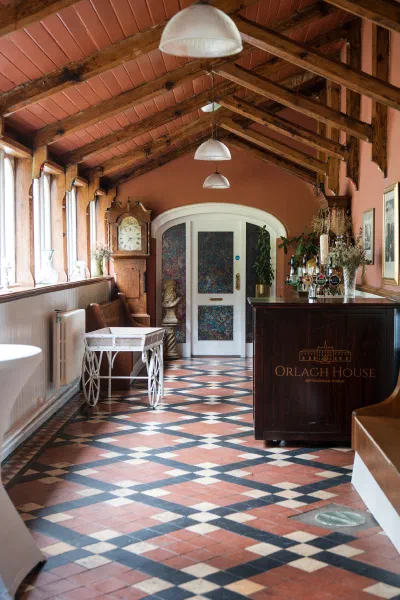
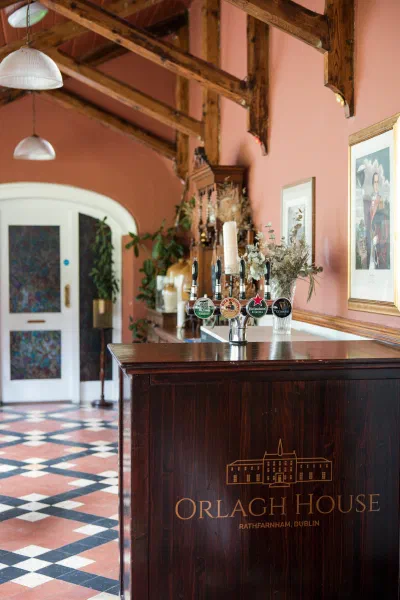
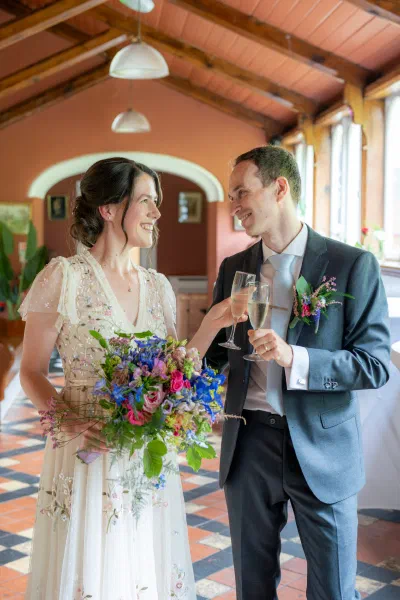
The atrium running along the side of the house is one of my favourite corners of the place. Chequered tiles, exposed beams, a wall of windows down one side, and the bar tucked at the end of it. It photographs beautifully at any hour, and it’s where people naturally drift when they want a conversation away from the crowd.
The Ceremony Room
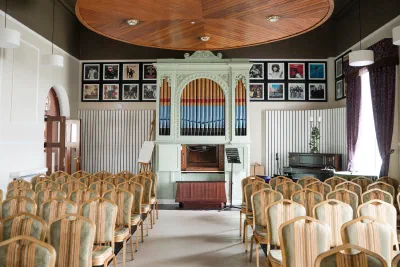
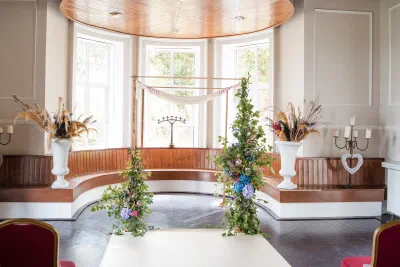
The ceremony room has a domed timber ceiling and a pipe organ at one end, which gives it a character most hotel function rooms would kill for. For this wedding the couple set up in the bay window instead, with a simple draped arch and greenery climbing both sides of it, so the light came in behind them all the way through the vows.
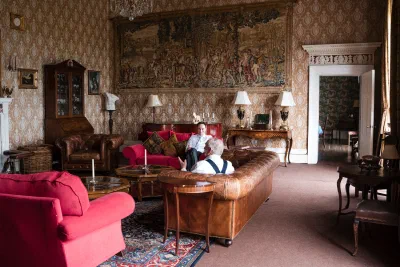
Down the corridor, the groom was patiently waiting for the festivities to begin while receiving words of wisdom from his grandfather.
Down the Stairs
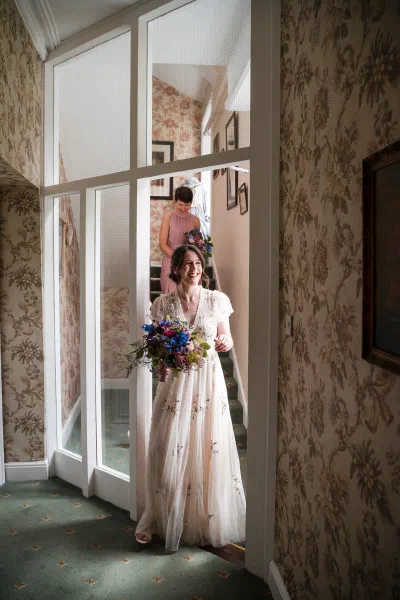
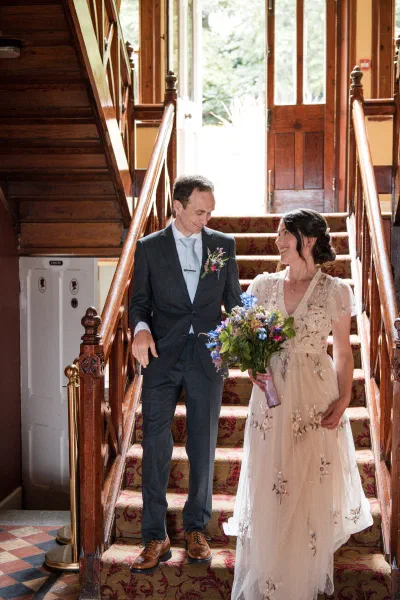
The staircase at Orlagh House does a lot of work on a wedding day. It’s wide, it’s carpeted in a pattern that has clearly survived several decades of guests, and it drops you straight into the hall. These two skipped the big reveal entirely and came down it together, which I love. That bouquet, all cornflower blue and wild greenery against an embroidered dress, is one I’m still thinking about.
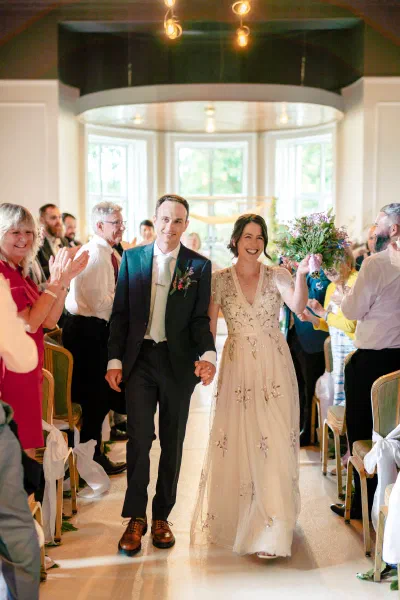
Then the good bit. Back up the aisle, everyone on their feet, bouquet in the air.
Portraits Without Leaving the Grounds
This is the part where a lot of couples lose an hour of their own wedding driving to a location. At Orlagh House you walk out the front door.

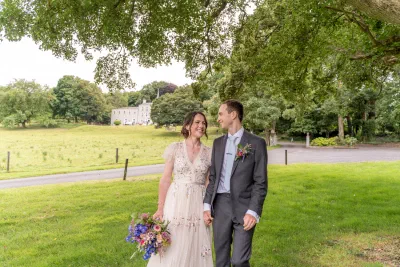
Twenty minutes, no car, and we had the avenue with the city behind it, open parkland with the house sitting in the frame, and mature trees for shade when the light got flat. We were back before anyone noticed they were gone.
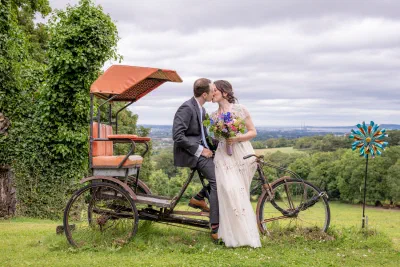
There is also, for reasons nobody fully explained to me, a vintage rickshaw in the garden. I’m not going to question it. It’s a great photo.
Details and Speeches
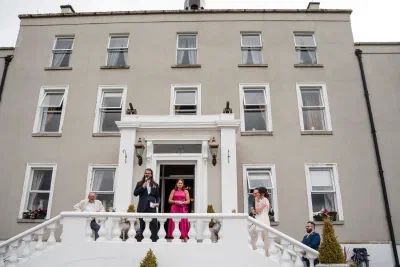
Speeches happened outdoors, from the front steps, with guests spread out on the front garden below and the house rising up behind. It’s a stunning setup looking over the city.
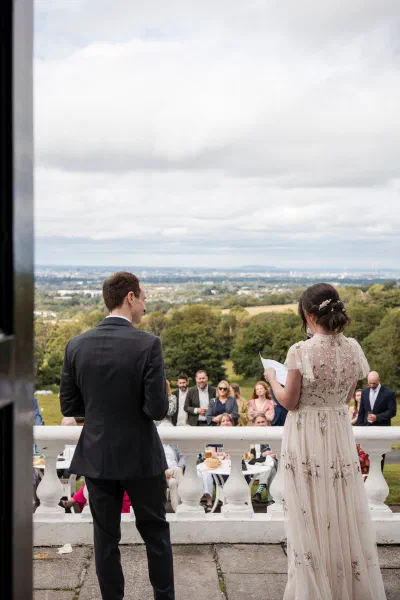
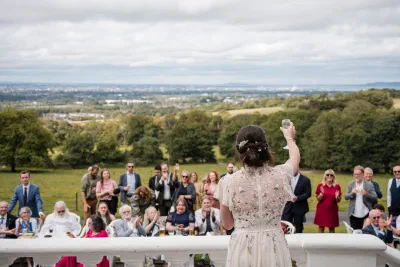
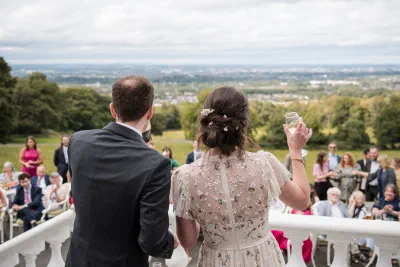
Photographing a speech from behind the speaker, with a hundred faces and an entire city behind them, is the kind of frame you only get at a handful of venues in Ireland. This is the reason to book Orlagh House.
Dinner
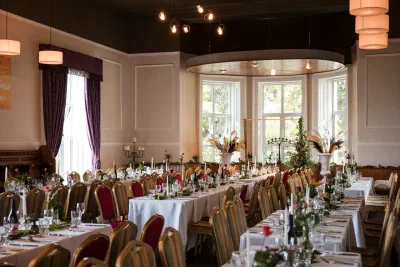
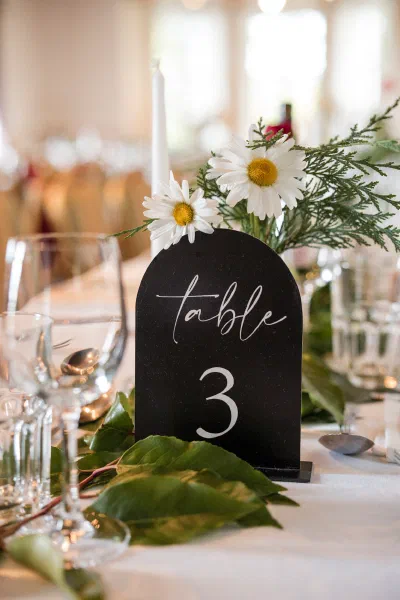
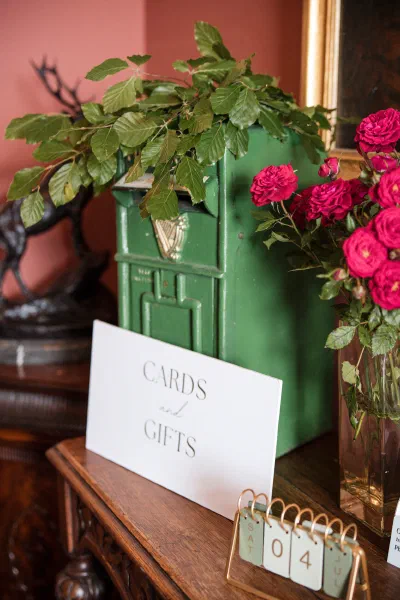
Long tables, candles, trailing greenery down the centre, and daisies. Always a good sign when the flowers look like someone picked them rather than ordered them.
Planning an Orlagh House Wedding
That’s the day itself. Here’s the practical side, for anyone weighing the venue up rather than just looking at the photos.
Everything Under One Roof
The thing that makes Orlagh House work is that it is a private house rather than a hotel with a function room bolted on. Preparations happen in the bedrooms upstairs, the ceremony happens downstairs, drinks spill into the atrium and the garden, dinner is in the dining room, and there are beds on site at the end of it.
Nobody is checking directions. Nobody is waiting on a bus. For couples travelling to Ireland, or anyone planning something smaller and more intimate, having the whole day contained in one building removes most of what usually goes wrong with a wedding timeline.
The Light
The period interiors do a lot of the work. Tall sash windows and high ceilings mean the rooms fill with soft, directional daylight, which is exactly what you want for unposed coverage: I can work through a morning without putting a flash up, and nothing looks lit.
The ceremony room’s bay window is the best of it. Set up in front of it and the light comes in behind you for the whole ceremony. The atrium holds up at any hour thanks to the wall of windows down one side, and the wooden floors, fireplaces and staircase give images depth and texture that a modern function room simply cannot.
Outside, the elevated position adds scale. Even under flat Irish cloud, the sheer drop of the city behind you does the work that good weather would otherwise have to.
A Timeline That Has Slack In It
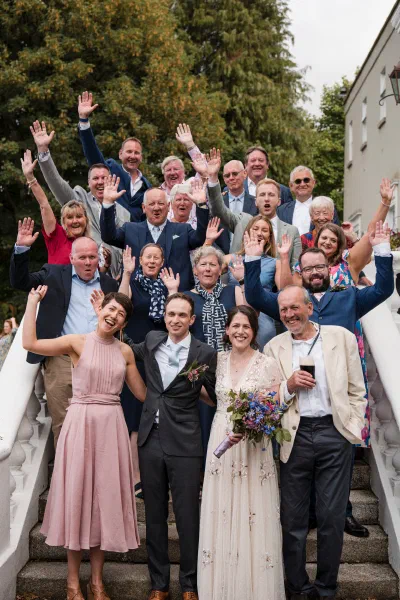
A typical day here runs: gentle coverage of preparations upstairs, ceremony downstairs, drinks and candids through the atrium and front garden, twenty minutes of portraits on the grounds, group photographs on the front steps, speeches, then dinner.
The reason it’s relaxed is that none of those transitions involve travel. If the ceremony runs late, the rest of the day absorbs it. If the light turns good at eight in the evening, we can step outside for ten minutes and be back before anyone notices.
The Frame Worth Booking It For
If there’s one reason to choose Orlagh House, it’s the speeches from the front steps: the speaker in the foreground, a hundred faces below them on the lawn, and an entire city behind that. There are only a handful of venues in Ireland where that photograph is available at all.
Thinking About Orlagh House?
If you’re weighing up venues in Dublin and you want somewhere that feels like the countryside without actually being an hour outside the city, this one is worth the drive up to see.
Have a look at wedding photography packages or get in touch and tell me about your day.