
At Susie and Chris’s Knightsbrook wedding, a walk outside after the speeches gave us a second portrait session in soft evening light. The main photographs were already done, so there was time to enjoy it.
That is a useful way to plan golden hour: a short opportunity for a different set of portraits, built around your wedding day and the light at your venue.
What Is Golden Hour?
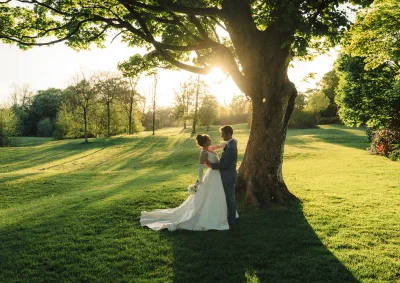
Golden hour is the period of low, warm sunlight around sunrise or before sunset. For wedding portraits, we usually mean the evening window. The light comes from the side, catches the edges of hair and veils, and can turn a familiar garden or path into a very different photograph.
The last hour before sunset is a useful starting point for planning, but the best window depends on cloud, the season and what blocks the sun. A hill, a building or a line of trees can put a portrait spot into shade well before the published sunset time.
Find the Time for Your Date and Venue
Use a sunset calculator for the location and the actual wedding date, including the year. Time and Date’s Dublin sun table lets you select a month and year; choose a closer location when your venue is elsewhere in Ireland.
As a sense of the seasonal difference, Dublin sunsets are around 10pm near midsummer and around 4pm in December. Those are broad planning examples, not a timetable for every county or every day of those months. The March and October clock changes also move the local clock time abruptly.
| Season | What to consider when planning portraits |
|---|---|
| Winter | Protect daylight around the ceremony and drinks reception. A late ceremony can leave little outdoor portrait time. |
| Spring | Check the exact date. The evenings lengthen quickly, and the March clock change affects the running order. |
| Summer | Evening portraits may fit after dinner or speeches. Check that your photography coverage includes that time. |
| Autumn | Sunset moves earlier as the season progresses. Recheck the plan particularly carefully around the October clock change. |
Once we know the date and venue, we can fit a likely window into your wedding day timeline. On the day, we adjust to the conditions.
Keep Your Main Portrait Session
Do the important couple and family photographs at a sensible point in the day, even if you hope for evening sun. That gives you a complete set if the weather changes or dinner runs late.
Golden hour can then be a shorter walk close to the reception. A nearby path, terrace or garden is often more useful than a dramatic location that needs a long drive.
Allow a Flexible Window
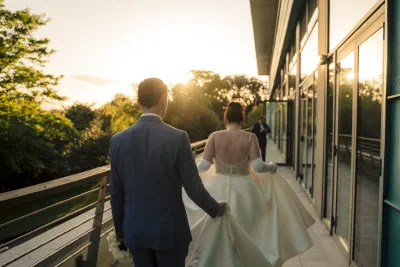
Tell the venue coordinator that you would like a short evening portrait break. We can agree a moment between courses, after the speeches or before the evening entertainment, depending on the light and the running order.
Around 10–20 minutes can be useful when the location is close by. Allow more if there is a walk, a change of shoes or a particular photograph you want to make. Avoid booking two important moments into the same window: if the cake cutting is happening, you will want to be there.
At Knightsbrook, the lake, trees and bridge are all within the grounds. The real wedding story shows both the earlier portraits and the evening photographs, so you can see what the change in light adds.
Let the Location Work With the Light
A good sunset portrait does not need the sun directly behind your heads. We can use side light, open shade beside a sunlit background or the last light falling across a doorway.

Bring shoes you can walk in and a layer for a cool evening. We will choose somewhere accessible and work with the wind, the ground conditions and how much time you want to spend away from your guests.
What If It Is Cloudy?
Cloud can soften the light across a much larger part of the day. We may still go out in the evening for a quiet set of portraits, but the photographs will have a different feel from a clear-sky sunset.
After sunset, cooler twilight can give us another option. This is often called blue hour. Its appearance and length vary with the conditions, so we plan it separately from sunlit golden-hour photographs.
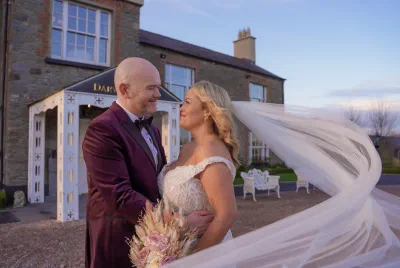
The Darver Castle wedding story has more examples of evening portraits, while the winter wedding guide covers making the most of shorter days.
Share your date, venue and ceremony time when you get in touch, and we can talk through where portraits might fit. You can also compare the photography coverage options, especially if you would like photographs after dinner.